-
 E-mail
-
 WhatsApp
CTV Valve:
+8613362917910
E-mail WhatsApp 

Valve body material: QT450
Nominal pressure PN: 1.0~1.6MPa
Nominal diameter DN: 50~2000mm
Strength test: PN×1.5
Seal test: PN×1.1
Operating temperature T: 0~150℃
Connection form: Thread
Applicable media: Clean water, oil, etc
Structural Features
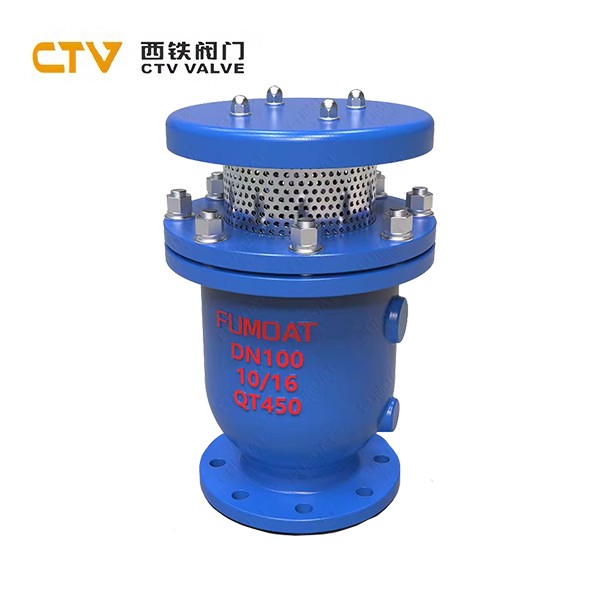
The compound exhaust valve consists of a shell and a valve core. The shell includes an upper cover, a lower end cover and two side guards. The valve core is a single-seat plunger structure, and the sealing surface is a conical seal type.
Reference Standards
Design and manufacturing standards: CJ/T217-2005;
Main safety performance standards: GB17219-92;
Test and inspection standards: GB13927-92;
Pressure temperature grade standards: GB19131-92;
Purpose
This series of exhaust valves are barrel-shaped and are mainly used on pipelines with water as the working medium to improve the efficiency of water transportation equipment and protect the pipeline from deformation and rupture. It is an essential equipment for pipelines and is mainly used for suction and exhaust of pressure transportation pipelines.
Working Principle
When water begins to be injected into the pipe, the plug stays in the open position and a large amount of exhaust is performed. When the air is exhausted, water begins to be supplied to the valve, the float floats up, and the plug is driven to the closed position to stop exhausting.
When the water in the pipe is transported normally, if a small amount of air gathers in the valve to a considerable extent, the water level in the valve will drop and the float will drop accordingly. At this time, the air will be discharged from the small exhaust hole. When the pump stops and the water in the pipe is empty or negative pressure is generated in the pipe, the plug will open quickly to inhale air to ensure the safety of the pipeline.
Valve body material: QT450
Nominal pressure PN: 1.0~1.6MPa
Nominal diameter DN: 50~2000mm
Strength test: PN×1.5
Seal test: PN×1.1
Operating temperature T: 0~150℃
Connection form: Thread
Applicable media: Clean water, oil, etc